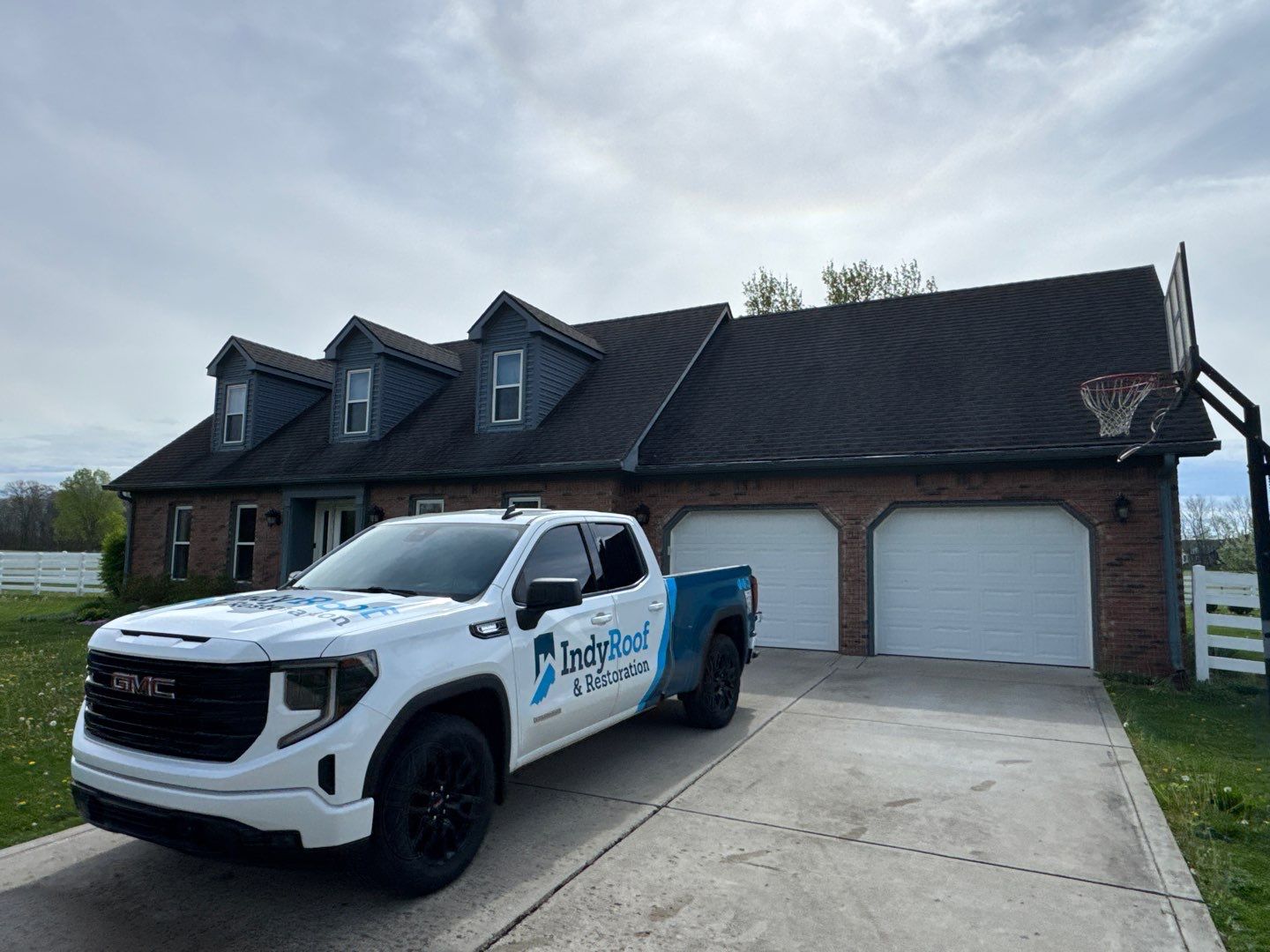
The reason this topic deserves careful thought is that the wrong cleaning method causes more damage than the algae ever would. Pressure washing a shingle roof will strip granules in a single pass and void most manufacturer warranties. Bleach mixtures that are too strong will kill landscaping below the eaves and corrode metal flashing. Scraping moss with a stiff metal brush tears the asphalt mat. Every year we see Innisbrooke homeowners who spent a weekend cleaning their roof and created leaks where none existed before. The right approach depends on what is actually growing, how long it has been there, and what your shingles are rated to tolerate.
It also helps to know what you are actually looking at. The dark streaks most homeowners call mildew are usually Gloeocapsa magma, a hardy blue green algae that feeds on the limestone filler in modern asphalt shingles. Moss is a true plant with shallow root structures that wedge between shingle courses and hold water against the mat. Lichen, which looks like crusty gray or pale green patches, is the hardest to remove because it bonds chemically to the granule surface. Each one responds to treatment differently, and misidentifying the growth is one of the most common reasons a cleaning attempt underperforms.
To make sense of the tradeoffs, the table below lays out the four most common removal approaches we see in the field, along with the conditions each one actually fits. Read it slowly. The differences between these methods are the difference between a roof that gets another decade and a roof that needs a full roof replacement two years from now.
| Method | Best For | Cost Range | Time to Results | Risk to Shingles | Longevity |
|---|---|---|---|---|---|
| Soft wash (sodium hypochlorite solution) | Black algae streaks, light moss | $400 to $900 | Visible in 1 to 7 days, full clearing in 4 to 8 weeks | Low when diluted correctly, moderate if applied to dry shingles in full sun | 3 to 5 years before regrowth |
| Zinc or copper strip installation | Preventing regrowth after cleaning, shaded roofs | $300 to $700 installed | Preventative, works as rain washes metal ions down the slope | Very low if installed under ridge caps correctly | 10 to 20 years |
| Manual moss removal with soft brush | Thick moss clumps before chemical treatment | $500 to $1,200 labor | Immediate physical removal | Moderate, depends heavily on technique and shingle age | Must be paired with treatment or moss returns in 12 to 18 months |
| Pressure washing | Not recommended for asphalt shingles under any circumstance | $200 to $500 | Immediate but destructive | High, strips granules and voids warranty | Often triggers premature replacement within 2 to 4 years |
What this table does not capture is how age changes the calculation. On a roof that is eight years old with healthy granule coverage, a properly diluted soft wash followed by zinc strip installation is straightforward maintenance. On a roof that is eighteen years old with curling edges and exposed mat, the cleaning itself can push it over the edge. This is where an honest inspection matters more than a cleaning quote. When we walk a Innisbrooke roof for a homeowner worried about moss, the first question we answer is whether the underlying shingle still has enough life left to justify the treatment. If it does not, we say so, and we talk through whether targeted roof repair or full replacement is the better investment.
The regrowth question is also worth sitting with. Soft washing kills what is there, but it does nothing to prevent spores from settling again next spring. North slopes under tree cover will re streak within three or four years unless you change the conditions. Trimming overhanging branches to let sunlight reach the roof is the cheapest long term fix. Installing zinc or copper strips along the ridge is the second. Every time it rains, a thin stream of metal ions runs down the slope and keeps algae and moss from establishing. This is why you almost never see streaking directly below galvanized chimney flashing or copper vent boots. The metal has been doing the work for decades.
Ventilation also plays a role that most homeowners miss. A roof deck that stays damp because of poor attic airflow holds moisture longer after every rain, which gives algae and moss more hours per week to feed and spread. If your Innisbrooke home has original soffit vents that have been painted shut, or an attic that smells musty in July, addressing roof ventilation problems will do more for biological growth than any cleaning product. We check ventilation as part of every inspection because the symptoms on top of the roof often trace back to what is happening underneath it.
Gutter condition feeds into this too. Clogged gutters hold standing water against the lower courses of shingles and the fascia, creating a constant moisture reservoir that moss colonies exploit first. We often find the worst growth on the bottom three feet of a slope directly above a gutter that has not been cleared in two seasons. Before scheduling any chemical treatment, it is worth clearing the gutters, flushing the downspouts, and checking that water is actually leaving the roof system rather than pooling at the edge.
One last point on timing. Late spring and early fall are the right windows for treatment in Innisbrooke. Shingles need to be dry but not baking, and you want at least a few days of mild weather after application so the solution can work before heavy rain washes it off. Trying to clean a roof in August at two in the afternoon will strip the very granules you are trying to protect. When a homeowner calls Innisbrooke Roofing in July asking for an immediate cleaning, we will usually walk the roof, document the condition, and schedule the actual treatment for September. The result is better, the shingles are safer, and the investment lasts longer.
Soft Wash Versus Pressure: The Real Economics
The single most important choice in roof cleaning is the method, and it is also where homeowners get talked into the wrong thing. A low pressure soft wash, where a treatment does the work and the roof is gently rinsed, costs a little more in product and patience but leaves the shingles intact. Pressure washing is faster and cheaper for the crew, and it is the one method that genuinely ruins roofs, blasting granules off and driving water under the shingles. A Innisbrooke homeowner quoted a suspiciously cheap, fast cleaning should ask exactly what pressure will be used, because the savings on a pressure wash job are routinely paid back in shortened roof life.
Prevention is where the economics tilt furthest in the homeowner's favor. A set of zinc or copper strips at the ridge, plus trimming the branches that shade and feed the worst slope, costs a fraction of repeated cleanings and works quietly with every rain for years. We would rather set a Innisbrooke roof up so it barely needs cleaning again than sell a recurring wash. The roofs that stay clean cheaply are the ones where someone fixed the conditions once instead of treating the symptom over and over. That is the difference between a roof that looks good for a season and one that looks good for the rest of its life.